

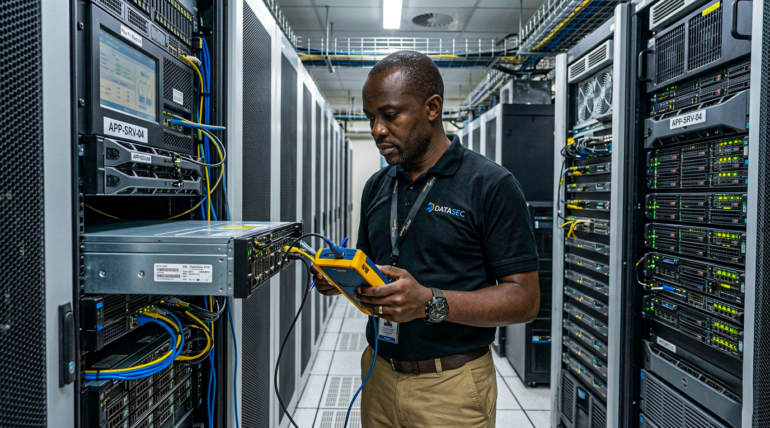
Sustainable business growth depends on the ability of IT infrastructure to evolve alongside organizational demands. A scalable infrastructure is not just a technical requirement—it is a strategic enabler of long-term success.
The process begins with a forward-looking architecture strategy. Organizations must design infrastructure that supports both current operations and future expansion, ensuring flexibility, performance, and reliability at every stage.
Virtualization and cloud integration are critical components of scalable infrastructure. By decoupling workloads from physical hardware, businesses can rapidly allocate resources, improve system efficiency, and respond to changing demands without disruption.
A robust network foundation is equally essential. High-performance networking solutions enable seamless connectivity across systems, locations, and users, ensuring that data flows efficiently throughout the organization.
Automation further enhances scalability by streamlining operations. From system monitoring to resource allocation, automated processes reduce manual effort, minimize errors, and improve overall efficiency.
Finally, continuous optimization and support ensure that infrastructure remains aligned with business objectives. Regular assessments, upgrades, and performance tuning help maintain reliability while supporting growth.
Organizations that invest in scalable IT infrastructure position themselves to adapt, innovate, and compete effectively in an increasingly digital and fast-paced business environment.